

Keeping track of your money as a teenager doesn’t have to be complicated or boring.
Whether you earn cash from a part-time job, get an allowance, or receive money as gifts, having a simple system can help you keep more of what you make.
Setting up easy-to-follow saving methods now builds habits that stick.
These habits will help you reach your goals faster and make your money work for you during your teenage years and beyond.
Knowing where to start can feel overwhelming. The good news? You don’t need fancy apps or complicated spreadsheets. A few basic strategies can make a real difference in how much you keep.
You’ll see simple ways to organize your money, set targets that matter to you, and watch your savings grow.
Simple Saving Strategies For Teens
Building strong money habits now means more cash in your pocket later.
Starting early with basic systems like automated transfers and learning how your money grows helps you get to your goals faster.
Building a Savings Habit Early
The best time to start saving is right now. When you create a savings habit as a teenager, you set yourself up for success throughout your life.
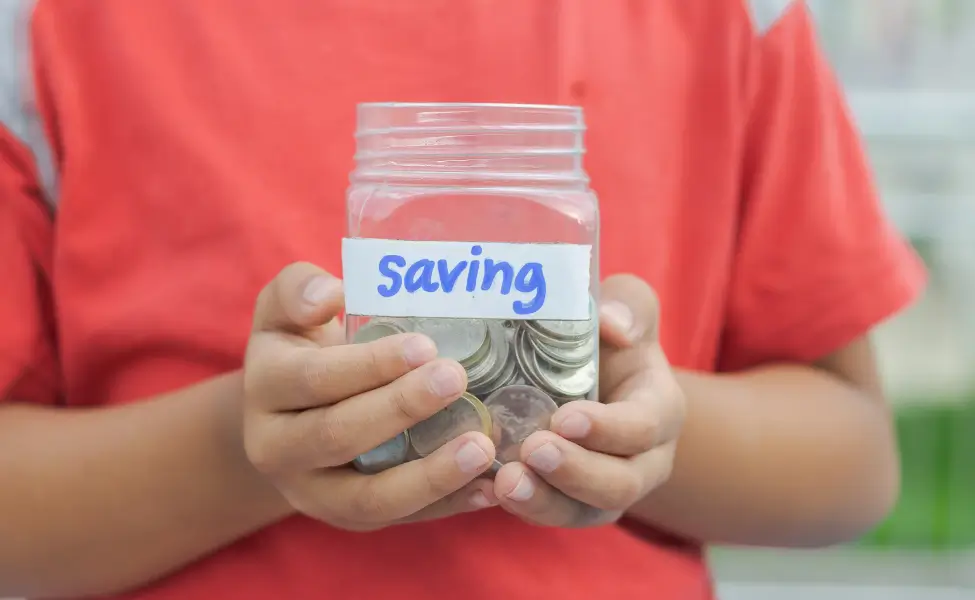
Try saving a set percentage from every dollar you receive. If you earn $100 from a part-time job, put $25 or $30 into savings right away. Whether you’re saving for a cracked phone screen replacement, new sports equipment, or college application fees, the approach works the same.
This method works whether you make $50 or $500. You can also try the fixed amount method.
Pick a specific number like $50 or $100 to save each month. That way, you always know what you’re aiming for.
Quick ways to build your habit
- Save money as soon as you get it, not at the end of the month
- Track your progress weekly to stay motivated
- Celebrate small wins when you reach mini-goals
- Make saving non-negotiable, just like paying for necessities
Consistency is the real secret here. Saving $20 every week adds up to over $1,000 in a year.
Pro Tip: Use the “One Day Delay” Rule
When you’re tempted to make an impulse purchase, wait 24 hours before buying. Put the money into savings instead and revisit the purchase idea the next day.
Most of the time, you’ll realize you didn’t need the item after all. This simple delay tactic helps you avoid buyer’s remorse and keeps more money in your savings account where it can grow.
The Power of Compounding Interest
Compounding interest happens when your money earns money, and then that new money earns even more. Your earnings start earning their own earnings.

Here’s how it works. You save $1,000 in a savings account with 4% interest per year.
After one year, you earn $40. The next year, you earn interest on $1,040, not just your original $1,000.
Example of $1,000 growing at 4% interest
| Year | Starting Balance | Interest Earned | Ending Balance |
| 1 | $1,000 | $40 | $1,040 |
| 2 | $1,040 | $41.60 | $1,081.60 |
| 3 | $1,081.60 | $43.26 | $1,124.86 |
Starting young gives you a huge advantage. The longer your money sits in an account earning interest, the more it grows without you lifting a finger.
As of late 2025, the average savings account interest rate is around 0.40%, but many high-yield savings accounts offer rates between 4% and 4.30%. Online banks and credit unions typically offer the best rates because they have lower overhead costs than traditional banks with physical branches.
Smart Use of Checking and Savings Accounts
A checking account is for money you plan to spend soon. A savings account is for money you want to keep and watch grow.
Keep your spending money separate from your savings. When your savings sits in a different account, you have to make an extra step to get to it, which helps prevent impulse spending.

Look for accounts designed for teens. Many banks offer accounts with no monthly fees and tools that help you track your money. Some even let you create multiple savings goals within one account.
Keep enough in your checking account to cover your regular expenses. Everything else belongs in savings where it can earn interest.
Automating Your Savings With Direct Deposit
Direct deposit means your paycheck goes straight into your bank account without you handling cash. This is the easiest way to save money consistently.
Set up your direct deposit to split your paycheck automatically. Many employers let you send part of your pay to checking and part to savings.
If you earn $400 per paycheck, you could send $100 straight to savings and $300 to checking. This way, your savings happens before you even see the money.
Steps to automate your savings
- Ask your employer about direct deposit split options
- Provide your checking account number and savings account number
- Choose your split percentage or dollar amount
- Let it run automatically with each paycheck
If your job doesn’t offer split direct deposit, set up automatic transfers through your bank. Schedule transfers for the day after payday.
This way, your savings happens before you have a chance to spend the money. You’ll barely notice the money is gone, and your savings will grow steadily.
Budgeting, Goal Setting, and Growing Your Savings
Learning to budget and set clear savings goals helps you keep more money in your pocket.

These skills work together to help you track where your money goes and build savings faster.
Creating an Easy-to-Follow Budget
A budget shows you exactly where your money comes from and where it goes. Start by writing down all your income sources, like allowance, birthday money, or paychecks from your part-time job.
Next, list your expenses in three groups. Fixed expenses stay the same each month, like a phone bill. Variable expenses change, like entertainment. Unexpected costs pop up, like replacing broken headphones.
Try the zero-based budgeting method where you assign every dollar a job until you reach zero. If you earn $200 monthly, you might put $50 toward savings, $30 for subscriptions, $40 for going out with friends, and $80 for other expenses.
You can also use the “pay yourself first” approach where 20% of what you earn goes straight to savings before anything else.
Common Mistake: Not Accounting for Irregular Income
Many teens have income that varies month to month from babysitting, tutoring, or seasonal work. The mistake is budgeting as if you’ll earn the same amount every month. Instead, base your budget on your lowest typical monthly income.
When you earn more than expected, the extra goes straight to savings. This prevents overspending in high-earning months and protects you when income drops.
Setting Realistic Savings Goals
Clear savings goals give you something specific to work toward. Break your goals into short-term targets like saving $50 for new shoes or replacing broken headphones in two months.
Set medium-term goals like $300 for a concert or weekend trip with friends in six months. Think about long-term plans like $1,500 for a car or $2,000 for exam travel in two years.
Write down why each goal matters to you. This keeps you motivated when you’re tempted to spend.
Figure out how much you need to save each week or month to hit your target. For a $200 goal in four months, you need to save $50 monthly or about $12 weekly.
Track your progress regularly. Seeing your savings grow makes you want to keep going.
Adjust your goals if they’re too hard or too easy. If saving $100 monthly feels impossible, start with $25 and increase it as you get better at budgeting.
Using Savings Goal Calculators and Apps
A savings goal calculator shows you exactly how long it takes to reach your target based on what you can save. These free online tools help you plan better and stay realistic about timing.
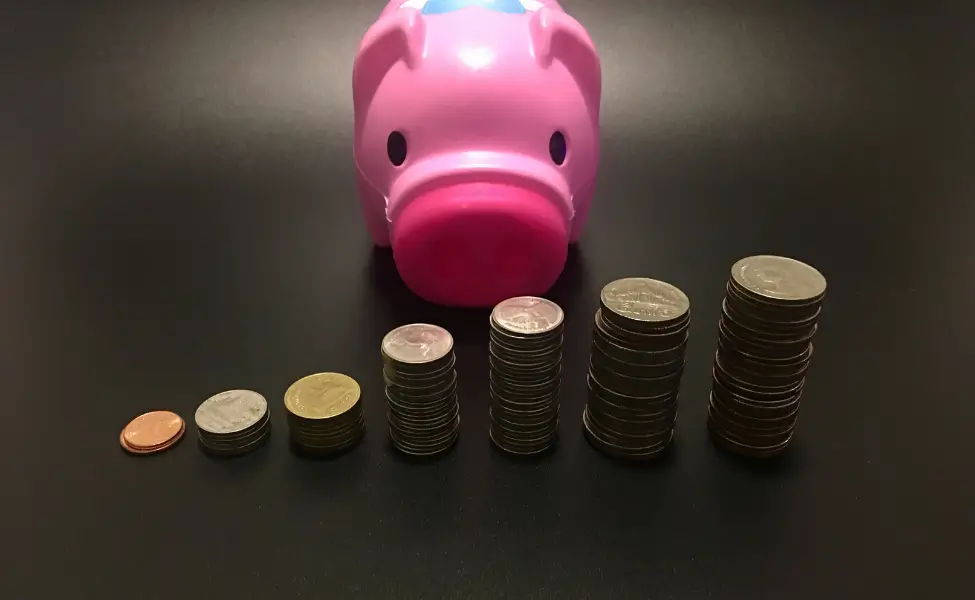
Banking apps designed for teens make tracking easier.
Apps like Copper help you create budget categories and set specific savings goals, though most charge monthly fees starting around $5. Free alternatives include PocketGuard for basic tracking or YNAB if you want detailed budgeting (subscription required).
Some investing apps let you buy fractional shares of stocks with small amounts of money. This means you can start investing with just $1 to $5 instead of waiting until you have hundreds of dollars. Major brokerages like Fidelity and Charles Schwab offer fractional share investing.
You learn about growing wealth while still being a teen. It’s a pretty cool feeling to watch your savings and investments grow, even if it’s just a little at first.
Building an Emergency Fund
An emergency fund is money you set aside for unexpected problems. Think broken laptops, surprise medical bills, or a cracked phone screen.
Keep this money separate from your usual savings so you don’t accidentally spend it on wants. Start small. Even $100 makes a difference when life throws a curveball.
Once you reach your first goal, try saving enough to cover one month of your basic expenses. If you normally spend $150 each month, that’s your new target.
Only use your emergency fund for real emergencies. If you take money out, rebuild it as soon as possible.
Specific Example: Why $500 Makes a Real Difference
You’ve built a $500 emergency fund by age 17. Your laptop suddenly breaks right before a major school project is due.
Without an emergency fund, you’d need to ask your parents for help or miss the deadline. With your $500 fund, you buy a refurbished laptop for $400, handle the crisis independently, and still have $100 left over. You’ve just experienced what financial preparation feels like.